
Assessment of Water Quality Parameters on the Macroinvertebrate Community of Lake Kita in Donga Local Government Area, Taraba State, Nigeria
1Department of Fisheries and Aquaculture, Federal University Wukari, Nigeria.
2Department of Fisheries, College of Agriculture Science and Technology, Jalingo. Taraba State, Nigeria.
*Correspondence
Michael Ibagye Oshimagye
Email:
oshimagyemicheal@gmail.com
Abstract
Physicochemical parameters of water were assessed on the macroinvertebrates of Lake Kita at Donga, Taraba State. Macroinvertebrates were collected using Van Veen Grabber along with water samples and analyzed using standard methods from four stations in the lake course. Samples were collected bimonthly between June 2018 and August 2018. A total of 1410 macroinvertebrates, consisting of 27 families, were identified from four sampling stations in the Lake. There were no significant differences (P> 0.05) in the mean values of all the physicochemical parameters recorded in all stations except for transparency in station D (5.00±0.38). Sampling stations with the highest number of macroinvertebrates were stations C and A, with 33.69% and 22.41% macroinvertebrates, whereas stations D and B had 21.63% and 22.27% macroinvertebrates, respectively. A high diversity of invertebrates was recorded in Station D, consisting of 23 families, followed by Station A, consisting of 22 families, then Station C with 20 families, and the least number of families was recorded in Station B with 16 families. There were positive correlations between Dissolved Oxygen among the members of Physidae and Gyrinidae. Gerridae, Corydalidae, Hirudidae, Planorbidae, and Elmidae families (p>0.05). pH had negative correlations with all families present, apart from Chironomidae. It was concluded that the inflow of effluents from the surrounding environment influenced the values of the physicochemical parameters of the water, which in turn had an influence on the macroinvertebrate community of the lake. It is recommended that the populace should be educated on the impact of their activities on the water body, as it affects fish production.
Keywords
Water quality, Physicochemical parameters, Macroinvertebrate, Lake Kita in Donga.
Citation
Oshimagye, M.I., Victoria, N.O., Eyiseh, T.E., Wachap, I.R., 2025. Assessment of Water Quality Parameters on the Macroinvertebrate Community of Lake Kita in Donga Local Government Area, Taraba State, Nigeria. Adv. Fish. Vet. Sci., 1(1): 16-27.
Introduction
Lakes are among the richest ecosystems in the world because of their ecological, economic, cultural, and recreational significance. These ecosystems generate revenue for people worldwide, including in Nigeria, and create a vast array of commodities and services (Adakole, 2001). The lakes provide crucial habitat for uncommon, endemic, and endangered plant and animal species (Majupuria and Majupuria, 2006). The lakes are in danger now because of human activities that alter the water quality, which directly affects the macroinvertebrate life cycle (Birendra et al., 2014).
Water quality standards deteriorate when toxic compounds are introduced into lakes, which disrupts necessary and lawful water usage at all levels (Ashraf et al., 2019; Iqbal, 2023; Meybeck, 2006). The distribution and number of macroinvertebrates are significantly influenced by the quality of the water. The number of distinct species found in an ecological community is known as species richness, and the relative abundance of various species in a given area is known as species composition (Okorafor et al., 2012).
It is rare to find aquatic macroinvertebrates in contaminated waterways since many of them are intolerant to toxins. Since only a small number of species can withstand such circumstances, the projected species richness decreases with increasing pollution. Lakes with high pollution levels have less oxygen, and aquatic biota cannot survive without it (Obiyor, 2016; Iqbal and Ashraf, 2018; 2020).
Water quality was formerly evaluated solely by physicochemical measures, which only represented punctual contamination (Jaber et al., 2015; Saleem et al., 2020; Urooj et al., 2022). The expansion of safe water services is facilitated by the use of portable microbiology techniques (Iqbal and Ashraf, 2022; 2024). Biological indicators are more suited to identifying long-term alterations in water quality since aquatic life is acclimated to certain environmental circumstances. Certain organisms may vanish (intolerant) and be replaced by others (tolerant) if these circumstances alter (Ojija and Laizer, 2016). Bacteria found in freshwater sediments degrade toxic substances released into the aquatic environment (Ebah et al., 2024a,b). According to Dhakal (2006), macroinvertebrates are valuable indicators for the health of aquatic environments because they are benthic, typically found at the water bottom hence do not move over long distances and respond to integrated stresses over time, which reflect fluctuating environmental conditions.
This study is, therefore, aimed to assess some water quality parameters on macroinvertebrate communities of Lake Kita, Donga, Taraba State.
Materials and Methods
Study Area
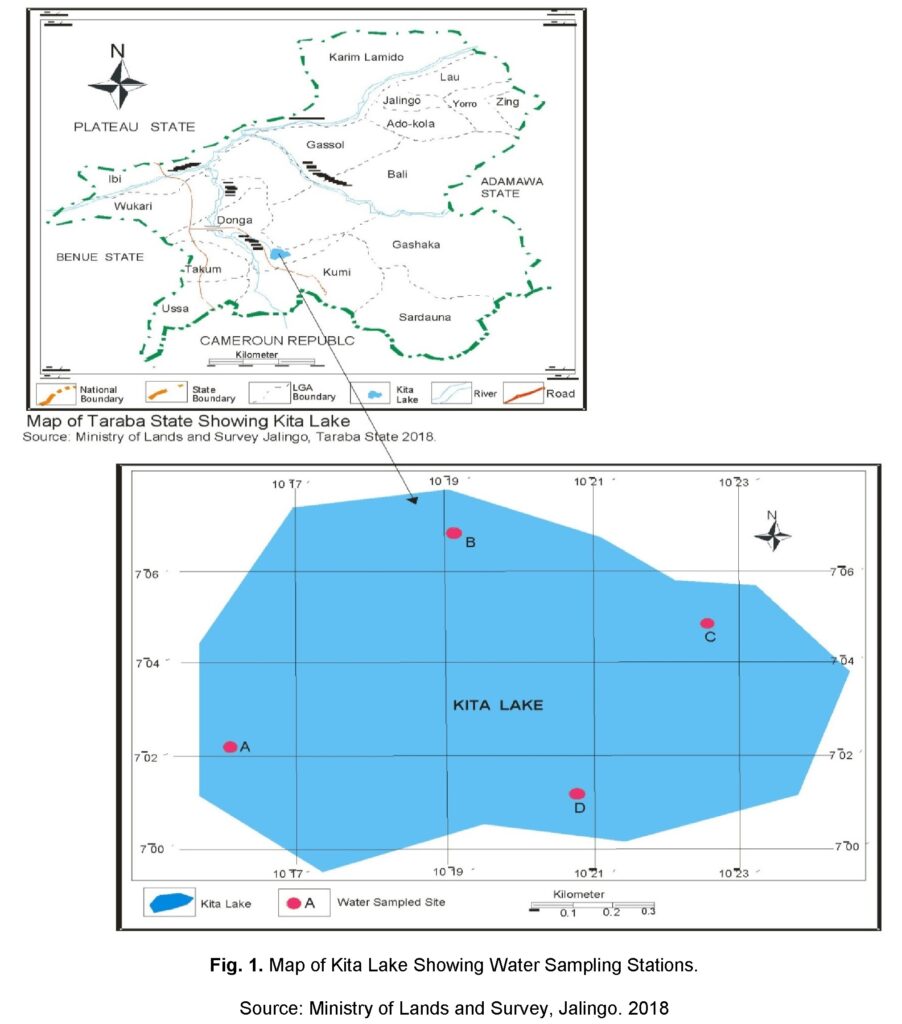
The study was carried out in Lake Kita Donga, located in Gartati Donga Local Government Area, in Taraba State (Figure 1). It lies between latitude 10’’17 °E -10’’23°E and longitude 7’’06°N-7’’00°N of the equator. The Lake has its intake from the Donga River, with its waters being at peak during rainy seasons as the Donga River banks flood (Adelalu and Zemba,2017). The dry season reaches its peak in January and February when the dusty North East trade winds blow across the State (Taphee and Jangur, 2014). Rainfall starts in the month of April and ends in November and therefore, usually expands for a period of 7-8 months. The mean annual rainfall is 1,350mm whereas the maximum annual rainfall is 1,650mm with peaks around August (Mamman et al., 2000). The mean temperature varies according to season. Maximum temperature ranges between 30°C and 39.4°C, while minimum temperatures range between 12°C and 23°C (Oruonye, 2012).
Sampling Periods and Sites
Sampling was done for a period of three months; June to August 2018 (bimonthly) at four stations selected along the Lake 100 meters from each other as follows;
Station A: was located at the point where river Donga flows into the Lake i.e. its entrance point.
Station B: was located at the point with high cultivation of rice and 100 meters from station A.
Station C: was located at a point where domestic wastes from houses located adjacent to the lake are washed directly into the water. Station D: was located at a point of maize and vegetation cultivation and a refuse dump and 100 meters away from station C.
Physiochemical Parameters Analysis
Water quality parameters such as pH, Temperature (°C), Total dissolved solids (TDS; ppm), and Electrical Conductivity (EC; Ms/cm,) using Hanna HI 9813-6 pH/EC/TDS/°C meter while Dissolved oxygen (mg/L) were determined using portable Heavy Duty Dissolved Oxygen meter (Model 407510). Biochemical oxygen demand was calculated as; BOD = (DO1-DO2) mg/L, Where: DO1 is dissolved oxygen (initial, Dissolved Oxygen value taken in-situ), DO2 is dissolved oxygen value obtained after 5 days of incubation in dark cardboard (Usman et al., 2014). Transparency was determined using a Secchi disk with graduated rope was used to obtain the degree of transparency of sampling points. The disk was lowered in water until it disappeared and the depth was recorded, the disk was then raised until it reappeared and the depth at which it reappeared was recorded. The average of the two measurements was considered as Secchi disk visibility (Usman et al., 2014).
Macroinvertebrate Sampling
Macroinvertebrates were taken bimonthly using a plankton net while some were handpicked during sampling and transferred into specimen collection containers labeled with each station code (Adakole and Anunne2003). During sampling, two random substrates were collected from each station for three minutes. The sediments were washed through three separate sieves of mesh size 2mm, 1mm, and 0.5mm in the Soil Science Laboratory, Federal University Wukari, Taraba State for further identification. The washed invertebrates were poured into a white tray, sorted out using a plastic spoon and forceps, and transferred to polyethylene containers and 4% formalin was added as a preservative (Adakole et al., 2003). The collected invertebrates were identified in the Biological Science Laboratory, Federal University Wukari, Taraba State under a binocular microscope using published identification keys (Minnesota, 2007; Mike et al., 2005; Schumaker, 2004). After identification and classification of invertebrates to family and order level, they were counted.
Data analysis
Data collected for physicochemical parameters were subjected to one-way analysis of variance laid out in a completely randomized design replicated thrice (Ado et al., 2024). The students-Newman-Keuls test was used to separate significant means at 0.05% level of probability. Pearson correlation analysis was also used to measure the association between physicochemical parameters and the abundance of macroinvertebrate communities in the study area at 0.05% level of probability using Genstat 12.1 software.
Results
The range of values for various parameters from stations A to D were pH (6.34 – 6.54), Electrical Conductivity (0.187μS /cm – 0.222μS /cm), Total Dissolved Solids (130.9Mg/L -164.6Mg/L), Dissolved Oxygen (3.99mg/L – 4.76mg/L), temperature (27.35°C – 27.91°C), and Biological Oxygen Demand values ranging from 3.24mg/L – 3.52mg/L (Table 1).
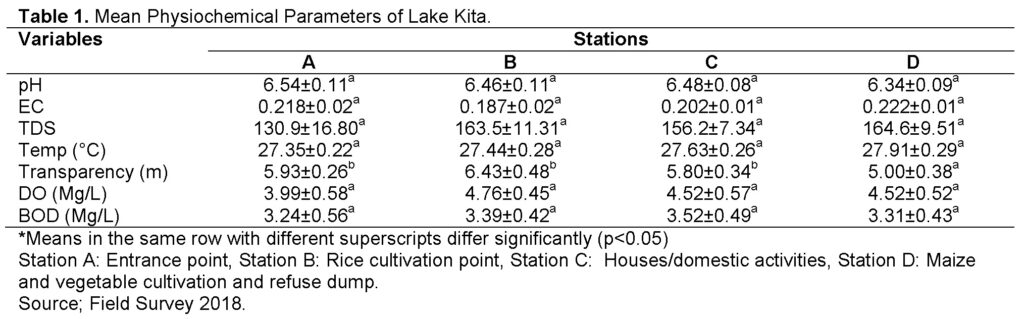
All the physiochemical parameters analyzed were not significantly different among the stations except for transparency for which a significant difference was observed in station D (vegetables and maize cultivation and refuse dump) (Table 2).
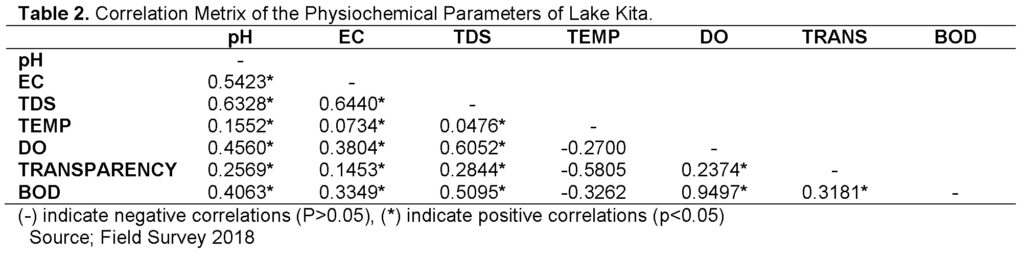
In the study, a total of 1410 macroinvertebrates were collected and identified from Lake Kita, Donga, Taraba State as indicated in Table 3. The most abundant families were Gerridae (35.81%), Physidae (25.88%), Chironomidae (9.64%), and Belostomatidae (7.02%), representing about 78.35% of the total macroinvertebrates.
Whereas the least abundant families were Tabanidae, Corydalidae, Hydrachnidae, Plecotera, and Heptageniidae each having (0.07%) of all macroinvertebrates collected. Respectively, sampling stations with the highest number of macroinvertebrates were stations C and A with 475 and 316 macroinvertebrates, whereas stations D and B had 305 and 314 macroinvertebrates respectively.
However, a high diversity of invertebrates was recorded in Station D consisting of 23 families, followed by Station A consisting of 22 families, then Station C with 20 families, and the least number of families was recorded in Station B with 16 families. The lake had a higher number of pollution-tolerant macroinvertebrates which entails that the water was not too clean.
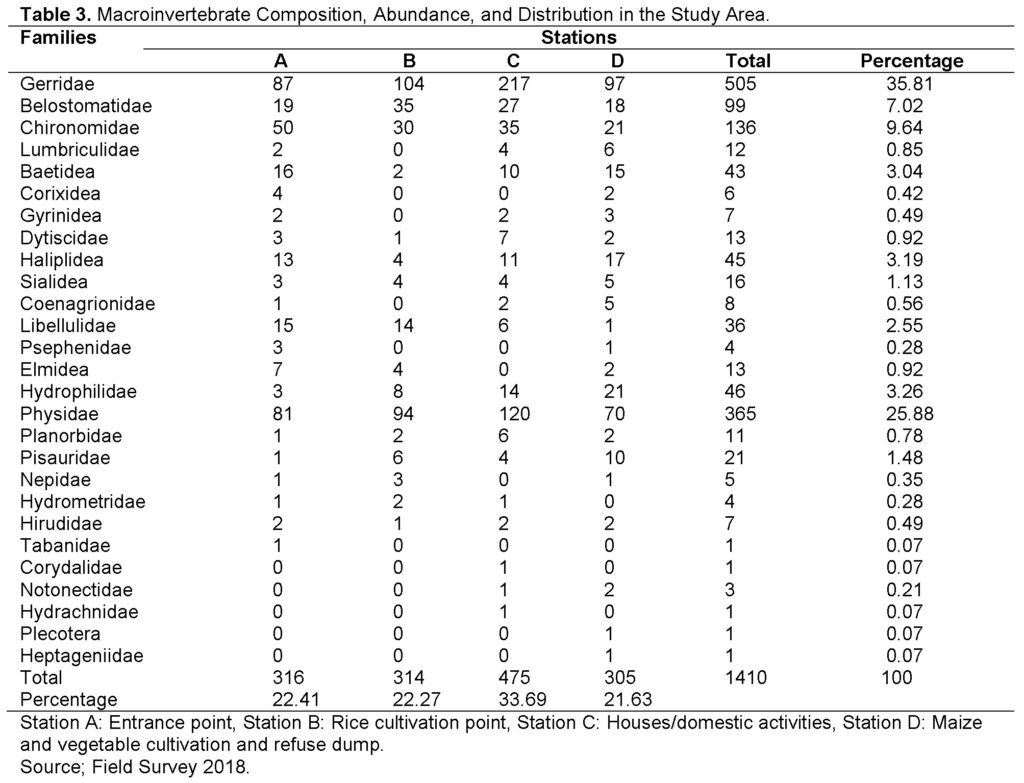
The mean values of the macroinvertebrates collected during the study at the various stations are presented in Table 4. Station C had the highest number of Gerridae (72.33±14.19) and Belostomatidae (13.50±11.50) family members while the least numbers were recorded in station D (32.33±7.75) and A respectively (9.00±1.00). Chironomidae was highest in station B (30.00±0.00) while the least number was recorded in station D (7.00±5.51). The family Physidae had the highest numbers in station B (47.00±22.00) while the least values were recorded in station D (35.00±29.00).
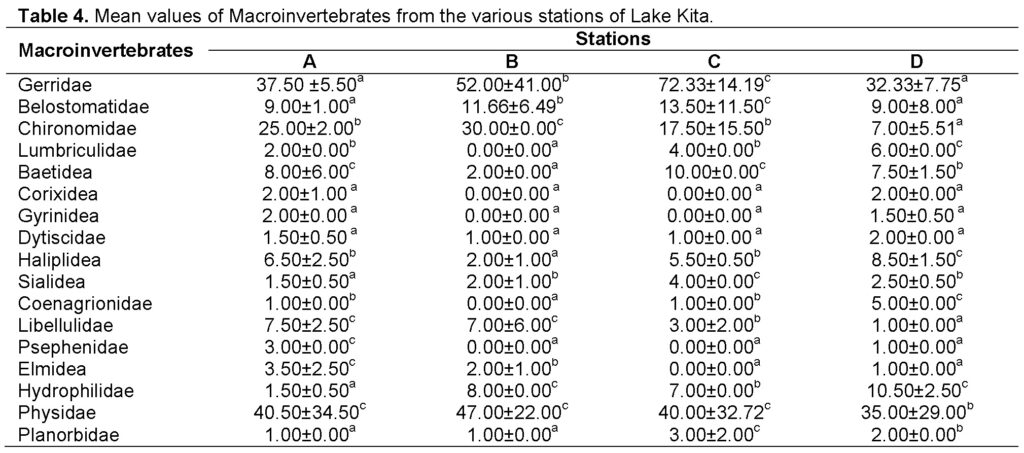
The correlation between the physiochemical parameters and the macroinvertebrates is presented in Table 5. A positive correlation was observed between all the physiochemical parameters and Chironomidae. Temperature correlated positively with Gerridae. Temperature correlated positively with Belostomatidae and Gerridae. Total Dissolved Solids, Dissolved Oxygen, Transparency, and Biological Oxygen Demand correlated positively with Physidae. Electrical Conductivity, Total Dissolved Solids, Temperature, Biological Oxygen Demand and correlated positively with Corydalidae. Temperature correlated positively with Hydrachnidae. Dissolved Oxygen, Temperature, and Biological Oxygen Demand correlated positively with Lumbriculidae. Temperature had a positive correlation with Hirudidae. Planorbidae had a positive correlation with temperature. A positive correlation existed between Temperature and Notonectidae. Dissolved Oxygen and Temperature correlated positively with Gyrinidae. Dissolved Oxygen and Electrical Conductivity had a positive correlation with Elmidae. The result shows a strong correlation between all the physiochemical parameters considered in this study and the family Chironomidae.
Discussion
The pH values obtained from stations A to D in this study were slightly acidic to moderately acidic (6.34 – 6.54), this result conformed to the findings of Oluwafunmilayo et al. (2017) of slightly acidity pH of Eleyele Lake. The acidic nature of this lake may be a result of nearby agricultural activities (rice and vegetable cultivation) where chemicals used for farming activities could possibly have been washed into the lake combined with the inflow of refuse into the water by runoff from rainfall (Akinnawo, 2023).
The highest electrical conductivity value was recorded in station D (0.222μS /cm), whereas the lowest value was recorded in station B (0.187μS /cm). Low electrical conductivity observed among stations contradicts the findings of Akan et al.(2012) and Didem and Duygun (2008) who reported high conductivity values in Lake Chad and Karakaya Dam Lake as ranging between 261.0μS/cm to 265.0μS/cm and 336.6μS/cm – 610μS/cm respectively. The low Electrical Conductivity observed in this study may be due to dilution of the water by rainy water (Qureshimatva et al., 2015).
The Total Dissolved Solids recorded from the various stations ranged between 130.9Mg/L -164.6Mg/L. The highest concentration was observed at station D, while the least concentration was observed at station A. These values contrasted with the findings of Adakole et al.(2003) in Kubanni Lake with Total Dissolved Solids concentration ranging from 65.00Mg/L – 293.80 Mg/L. The low values of Total Dissolved Solids recorded in this study could be associated with dilution of water following rainfall (Umerfaruq and Solanki, 2015).
The levels of Dissolved Oxygen within the four sampling stations varied from 3.99mg/L to 4.76mg/L, the highest value was recorded at station B, while station A showed the least Dissolved Oxygen Level. The Dissolved Oxygen values recorded show that the water is moderately aerated, the results, however, do not conform with the findings of Usman et al. (2014) who reported higher Dissolved Oxygen levels in Lake Alau (5.28mg/L to 8.63mg/L) and Olamide (2017) who also reported high Dissolved Oxygen levels in Owena Lake (6.63mg/L -7.89mg/L). The low Dissolved Oxygen levels of the water particularly in station A could be attributed to the decomposition process of organic matter brought into the lake through surface runoff.
The highest temperature values were observed from station D (27.91°C), while the least temperature value was recorded from station A (27.35°C). This result contrasts with the findings of Dhanam et al. (2016) on the temperature level of Ousteri Lake (29.2°C – 34.5°C), Usman et al. (2014) on the level of temperature of Lake Alau ranging from 18.95°C – 29.86°C and Esenowo et al. (2017) for the temperature level of Nwaniba Lake, which ranged from 26.00°C – 31.00°C. The temperature values could be a result of the rains and the associated cloudy weather during sampling periods (Usman et al., 2014).
The Biological Oxygen Demand values observed in the various stations ranging from 3.24mg/L – 3.52mg/L conform to with the report of Dhanam et al. (2016) who recorded similar low Biological Oxygen Demand levels for waters of Ousteri Lake ranging between 1.82mg/L – 3.17mg/L and Qureshimatva et al. (2015) who also reported a low Biological Oxygen Demand level (1.78mg/L to 3.22mg/L) in Chandlodia Lake. Biological oxygen demand (BOD) values indicate the extent of organic pollution in water quality (Jonnalagada and Mhere, 2001). The slightly high level of Biological Oxygen Demand in station C may be due to the possible addition of a high amount of waste along with rainwater from the surrounding and the addition of organic waste in the lake by certain human activities (Qureshimatva et al., 2015).
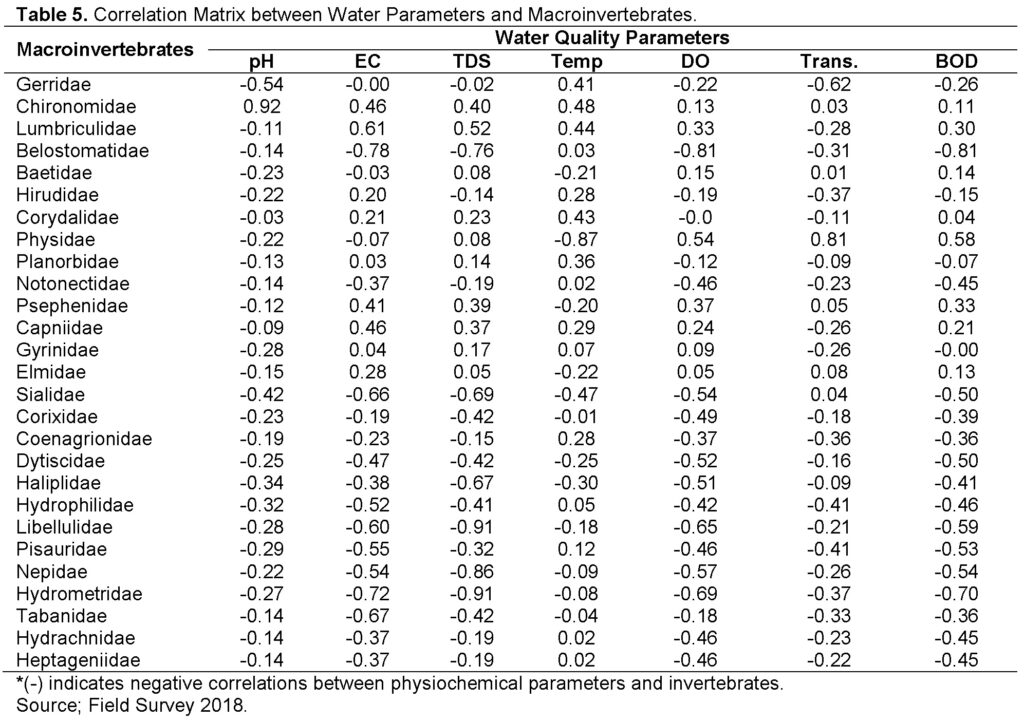
The pH showed a positive significant correlation (P<0.05) with all parameters. Total Dissolved Solids had a positive correlation with pH, temperature, and electrical conductivity this was in correspondence with the findings of Adakole et al. (2003).
Dissolved oxygen had positive correlations with pH, Electrical Conductivity, and Total Dissolved Solids, whereas a negative correlation was recorded between Dissolved Oxygen and Temperature, this result conformed with the findings of Ebenebe et al.(2016), they reported that temperature increase brings about a decrease in DO concentrations which may be due to respiration and other processes such as breakdown organic matters. Transparency had a positive correlation between pH, Electrical Conductivity, Total Dissolved Solids, and Dissolved Oxygen, the result corresponds with the findings of Adakole et al. (2003). A negative correlation was recorded between Transparency and Temperature. Biological Oxygen Demand had a positive correlation between pH, Electrical Conductivity, Total Dissolved Solids, Dissolved Oxygen, and Transparency but a negative correlation was recorded between Biological Oxygen Demand and Temperature.
The total number of the macroinvertebrate population recorded in this study does not conform with reports of Okorafor et al. (2012) who recorded a total of 185 taxa, Ogbeibu and Oribhabor (2002) who recorded 46 taxa, and Ikomi et al. (2005) who also reported of 59 taxa from similar study areas. Hemiptera was represented by 6 families; Corixidae, Belostomatidae, Notonectidae, Gerridae, Nepidae, and Hydrometridae and they dominated the study area. This result conformed to the reports of Edegbene et al. (2012), indicating that this group of macroinvertebrates is a common macroinvertebrate that can be found in Nigerian waters.
The high diversity of macroinvertebrates recorded in stations D and A (23 and 22 families respectively) could be attributed to the isolation of the stations from high human activities such as fishing and high aquatic plants which tend to serve as shelter, direct and indirect food source to macroinvertebrates (Olamide 2017). Reduced diversity in stations C and D could be attributed to disruption in the habitat of the invertebrates brought about decomposition of domestic sewage from homes as well as organic fertilizers used in farming (Emere and Nasiru, 2009; Dou et al., 2022). The high population of macroinvertebrate families in the lake suggests deterioration in the physiochemical parameters of the water as members of these families are known to be tolerant to pollution (Ojija and Laizer, 2016).
A positive correlation was observed between all the physiochemical parameters and the macroinvertebrate population. Also some of the physiochemical parameters had positive correlations with some of the macroinvertebrates collected, meaning that a change in such parameters would bring about a corresponding change in the population of the macroinvertebrates.
The macroinvertebrates (e.g. midges) in this family would prefer to live in waters with adequate Dissolved Oxygen, Temperature, Biological Oxygen Demand, pH level, and adequate transparency (Nur et al., 2017). Physidae, Lumbriculidae, and Gyrinidae were observed to have a positive correlation with Dissolved Oxygen. Stoyanova et al. (2014) found that usually gill-breathing aquatic insects (e.g. mayflies, caddisflies, and stoneflies) are affected by conditions that reduce the dissolved oxygen of the water, like pollution; therefore the presence of mayflies, caddisflies, and stoneflies indicates high stream quality. Macroinvertebrates in these families (gill snails, whirligig beetles, and aquatic worms) would have a higher diversity in waters with adequate Dissolved Oxygen levels.
Electrical Conductivity is one of the factors that affect the abundance of macroinvertebrates in water bodies (Nur et al., 2017). Hirudidae and Planorbidae and Electrical Conductivity had positive correlations, thus affecting the abundance of members of these families (e.g. leech, and orb snails) in the study area.
Another physiochemical parameter that influences the abundance of macroinvertebrates in water bodies is the water temperature (Nur et al., 2017). Families observed to have positive correlations with the water temperature were Corydalidae, Belostomatidae, Chironomidae, Gerridae, Hydrachnidae, Hirudidae, Elmidae, and Planorbidae. The temperature levels among the stations affected the abundance of members of each of these families (e.g. dobsonfly, giant water bug, midges, water striders, water mites, leech, riffle beetles, and orb snails).
Next, macroinvertebrates showed no statistically significant correlations with pH, except for the members of the Chironomidae family. The pH range of 6.5 to 8.0 provides adequate protection for the life of freshwater fish and bottom-dwelling macroinvertebrates (Scheibler et al., 2014; Lukhabi et al., 2024). Thus, all of the four stations are still in the acceptable range of pH for aquatic life all freshwater aquatic life is unharmed and no bad impacts occur. The results reveal that the composition and abundance of macroinvertebrates depend on physiochemical parameters. Thus there would be abundance when there is an increase in Dissolved Oxygen level, Electrical Conductivity, Temperature, and Biological Oxygen Demand.
Conclusion
Based on this study, it can be concluded that the physiochemical parameters of Lake Kita were influenced by the inflow of chemicals from farms located along the course of the lake. These parameters in turn influenced the composition, abundance, and diversity of macroinvertebrates.
Acknowledgment
The authors sincerely thank the Department of Fisheries and Aquaculture, Federal University Wukari, for providing the necessary facilities to complete this research.
Conflict of interest
The authors declare no conflict of interest.
References
Adakole, J.A., 2001. The effect of domestic agricultural and industrial effluents on the water quality and biota of Bindare Stream, Zaria-Nigeria. PhD thesis, Dept. of Biological Sciences, Ahmadu Bello University, Zaria. 25pp.
Adakole J.A, Mbah, C.E., Dalla, M.A., 2003. Physicochemical limnology of Lake Kubanni, Zaria-Nigeria. 29th WEDC International Conference, towards the Millennium Development Goals.
Adakole, J.A., Anunne, A.A., 2003. Benthic macro invertebrates as indicators of environmental quality of an urban stream, Zaria, Northern Nigeria, J. Aquatic Sci., 18(2): 85-92.
Adelalu, T.G., Zemba, A.A., 2017. Land Use and Its Implication on Natural Environment of Donga LGA, Nigeria. Phys. Sci. Int. J., 16(4): 1-10.
Ado, B.V., Aernan, P.T., Odo, J.I., Antia, U.E., Omeonu, F.C., Iqbal, M.N., 2024. Optimization of Bioprotein Production by Native Trichoderma harzianum using Terminalia superba Sawdust as Substrate. Int. J. Mol. Microbiol., 7(2): 66–75.
Akan, J.C., Mohammed, T.A., Zaynab, M.C., Fanna, I.A., 2012. Assessment of Pollutants in Water and Sediment Samples in Lake Chad, Baga, North Eastern Nigeria. J. Environ. Protec., 3: 1428-1441.
Akinnawo, S.O., 2023. Eutrophication: Causes, consequences, physical, chemical and biological techniques for mitigation strategies. Environ. Challenges., 12: 100733.
Ashraf, A., Iqbal, I., Iqbal, M.N., 2019. Waterborne Diseases in Poultry: Drinking Water as a Risk Factor to Poultry Health. PSM Microbiol., 4(3): 75-9.
Birendra, G., Rejina, M.B., Ramesh, P.S., Dharma, R.D., 2014. Aquatic Macro-invertebrates as Bio-indicators: An Approach for Wetland Water Quality Assessment of Rampur Ghol, Chitwan, Nepal. J. Inst. Sci. Technol., 19(2): 58-64.
Dhakal, S., 2006. Study on physiochemical parameters and benthic macroinvertebrates of Balkhu Khola in Kathmandu Valley, Central Nepal. Management of Water, Wastewater and Environment: Challenges for the Developing Countries, Kathmandu.
Dhanam, S., Sathya, A., Elayaraj, B., 2016. Study of physicochemical parameters and phytoplankton diversity of Ousteri Lake in Puducherry.World Sci. News., 54:153-164.
Didem, O., Duygu, O., 2008. Bioindicator Benthic Macroinvertebraten for Assessing Water Quality: A Case Study on Karakkaya Dam Lake. Proceeding of Taal 2007. The 12th World Lake Conference: 2148-2153.
Dou, Q., Du, X., Cong, Y., Wang, L., Zhao, C., Song, D., Liu, H., Huo, T., 2022. Influence of environmental variables on macroinvertebrate community structure in Lianhuan Lake. Ecol. Evol., 12(2): e8553.
Ebah, E.E., Odo, J.I., Dickson, I.O., Iqbal, M.N., 2024a. Biodegradation of Combine Tributyltin and Diphenyltin by Bacteria in Freshwater Sediment. Int. J. Mol. Microbiol., 7(1): 29-38.
Ebah, E.E., Odo, J.I., Ogbada, I.E., Iqbal, M.N., 2024b. Isolation and Characterization of Bacteria Responsible for the Degradation of Tributyltin (TBT) from Freshwater Sediment. PSM Biol. Res., 9(2): 66-71.
Ebenebe, C.I., Ihuoma J.N., Ononye B.U., Ufele A.N., 2016. Effect of physicochemical properties of water on aquatic insect communities of a stream in Nnamdi. Int. J. Entomol. Res., 1(7): 32-6.
Edegbene, A.O., Arimoro F.O., Nwankwa, K.H., Onovoh, G.O., Ogidiaka, E., Abolagba, O.J., 2012. The physical and chemical characteristics of Atakpo River, Niger Delta, Nigeria. J. Aquatic Sci., 27(2).
Emere, M.C., Nasiru, C.E., 2009. Macroinvertebrate as Indicator of the water quality of an urbanized stream, Kaduna Nigeria.J. Aquatic Sci., 7: 2-3.
Esenowo, I.K., Ugwumba, A.A.A., Akpan, A.U., 2017. Evaluating the Physicochemical Characteristics and Plankton Diversity of Nwaniba River, South-South Nigeria. Asian J. Environ. Ecol., 5(3): 1-8.
Ikomi R.B., Arimoro, F.O., Odihirin, O.K., 2005. Composition, Distribution and Abundance of macro invertebrates of the upper reaches of River Ethiope, Delta State.Zoologist., 3: 68-81.
Iqbal, M.N, Ashraf, A., 2018. Environmental Pollution: Heavy Metals Removal from Water Sources. Int. J. Altern. Fuels. Energy., 2(1): 14-15.
Iqbal, M.N., Ashraf, A., 2020. Water Quality a Priority for Profitable Fish Farming. PSM Biol. Res., 5(2): 92-94.
Iqbal, M.N., Ashraf, A., 2022. The Use of Portable Microbiology Technique Facilitate Expansion of Safe Water Services. PSM Microbiol., 7(3): 101-3.
Iqbal, M.N., Ashraf, A., 2024. Water Quality of Public and Municipal Supplies: Potential Health Risk from Household Water Storage. PSM Microbiol., 9(2): 36-8.
Iqbal, M.N., 2023. Dairy Industry in Pakistan: Impact of Dairy Farming on Water Quality. PSM Biol. Res., 8(1): 59-61.
Jaber, A., Abbas, E.S., Asghar, A., Hormoz, S., Paul, J.V., 2015. Monitoring and assessment of water health quality in the Tajan River, Iran using physicochemical, fish and macro invertebrates indices. J. Environ. Health Sci. Engin., 13: 29.
Jonnalagadda, S.B., Mhere, G., 2001. Water quality of the Odzi River in the Eastern Highlands of Zimbabwe.Water Res., 35: 2371-2376.
Lukhabi, D.K., Mensah, P.K., Asare, N.K., Akwetey, M.F.A., Faseyi, C.A., 2024. Benthic macroinvertebrates as indicators of water quality: A case study of estuarine ecosystems along the coast of Ghana. Heliyon., 10(7): e28018.
Majupuria, T.C., Majupuria, R.K., 2006. Wildlife and Protected Areas of Nepal. S. Devi, Bajoria Road, Opposite Saharanpur (U.P.), India.
Mamman, A.B., Oyebanji, J.O., Petters, S.W., 2000. Nigeria a people United, a future Assured. Vol. 2 Survey of State, Gabumo. Yola. Nigeria.
Meybeck, M.H., 2006. Global Changes in Aquatic Systems and their Interrelations with Human Health. Interactions between Global Change and Human Health Pontifical Academy of Sciences, Scripta Varia 106, Vatican City 2006.
Mike, B., Dennis, H., Todd, H., Ken, K., Richard, L., Jim, L., Tom, W., 2005. Benthic macroinvertebrate key. IOWATER Volunteer Water Quality Monitoring. 28.
Minnesota, 2007. Macro invertebrate keys based on the work of University of Wisconsin- Extension, the Wisconsin Department of Natural Resources, and the Riveredge Nature Center, Newburg Wisconsin.
Nur, A.H., Norlizayati, R., Nadia, N.M., Muhammad, A.F., 2017. Influence of Physicochemical Parameters on Abundance of Aquatic Insects in Rivers of Perak, Malaysia. Int. J. Adv. Sci. Engin. Technol., 5: (Spl. Issue-1).
Obiyor, K.I., 2016. Study on Water Quality Parameters and Benthic Fauna Diversity of Otamiri River in Owerri, Imo State, Nigeria. Masters project work, Dept. of Zoology and Environmental Biology, University of Nigeria, Nsukka.
Ogbeibu, A.E., Oribhabor, B.J., 2002. Ecological impact of river impoundment using benthic macroinvertebrates as indicators. Water Res., 36: 2427-2436.
Ojija, F., Laizer, H., 2016. Macro Invertebrates as Bio Indicators of Water Quality in Nzovwe Stream, in Mbeya, Tanzania. Int. J. Sci. Technol. Res., 5(6):211-22.
Okorafor, K.A., Andem, A.B., Okete, J.A., Ettah, S.E., 2012. The Composition, Distribution and Abundance of Macro-invertebrates in the Shores of the Great Kwa River, Cross River State, South-east, Nigeria. Eur. J. Zool. Res., 1(2): 31-36.
Olamide, O.O.P., 2017. Composition and abundance of macro-benthic invertebrates in Owena reservoir, Ondo State, Nigeria. Int. J. Aquat. Sci., 8(2): 83-90.
Oluwafunmilayo, O.O., Hakeem, O.A., Adeolu, A.A., Olusola, J.O., 2017. Assessment of the Pollution Status of Eleyele Lake, Ibadan, Oyo State, Nigeria. J. Health Poll., 7(15): 51-62.
Oruonye, E.D., 2012. An Assessment of Food Risk Perception and Response in Jalingo Metropolis. Jaingo, Taraba State. Int. J. Forest, Soil and Erosion., 3: 4-12.
Qureshimatva, U.M., Maurya, R.R., Gamit, S.B., Patel, R.D., Solanki, H.A.,2015. Determination of Physicochemical Parameters and Water Quality Index (Wqi) of Chandlodia Lake, Ahmedabad, Gujarat, India. J. Environ. Analyt. Toxicol., 5: 288.
Saleem, M., Aftab, A., Iqbal, I., 2020. Physicochemical and Microbiological Analysis of Drinking Water Collected from Gulshan-Ravi, Lahore. Int. J. Altern. Fuels. Energy., 4(1): 1-8.
Schumaker J.C., 2004. Macro Invertebrates as Bioindicators of Stream Health. Western U.P. Center for Science, Mathematics and Environmental Educ. 105 Dillman Hall, Michigan Technological University, 1400 Townsend Dr., Houghton, MI 49931
Scheibler, E.E., Claps, M.C., Roig-Junet, S.A., 2014.Temporal and altitudinal variation in benthic microinvertebrate assemblages in an Andean river basin of Argentina. J. Limnol., 73(1): 92-108.
Stoyanova, T., Vidinova, Y., Yaneva, I., Tyufekchieva, V., Parvanov, D., Traykov, I., Bogoev, 2014. Ephemeroptera, Plecoptera and Trichoptera as indicators for ecological quality of the Luda Reka River, Southwest Bulgaria. Acta Zool. Bulgar., 66(2): 255-260.
Taphee, G.B., Jangur, A.A., 2014. Productivity and Efficiency of Groundnut Farming in Northern Taraba State, Nigeria. J. Agric. Sustain., 5(1): 45-56.
Umerfaruq, M.Q., Solanki, H.A., 2015. Physico-chemical parameters of water in Bibi Lake, Ahmedabad, Gujarat, India. J. Pollut. Eff. Contr., 3(2): 1-5.
Urooj, S., Narejo, A.H., ul Sahar, N., Iqbal, M.N., 2022. Accessing the Fecal Pollution of the Aquifer Systems using Portable Microbiology Technique: An Affordable Approach to Enhance Coverage of Safely Managed Water Services. PSM Microbiol., 7(3): 73-81.
Usman, A., Solomon, S.G., Okayi, R.G., 2014. Some Physico-Chemical Parameters and Macroelement of Lake Alau, North East Nigeria. Niger. J. Fish. Aquac., 2(1): 24 – 36.